It's one of the most common questions we hear from people researching dental implants: if I'm missing five teeth, do I need five implants? The short answer is no, not always. A single implant can replace a single tooth, but when several or all of your teeth are missing, a few well-placed implants can work together to support many teeth at once. Here's how that works, and what decides the right number for your smile.

Watch: Do You Need One Implant for Every Missing Tooth?
First, What Is a Dental Implant?
People often say "dental implant" when they mean the whole replacement tooth, but the implant itself is only the part anchored in your jawbone: a small titanium post that takes the place of a tooth root. For a single tooth, a connector called an abutment joins the implant to a crown, the part you actually see. Together, those pieces replace a missing tooth without leaning on the teeth next to it for support.
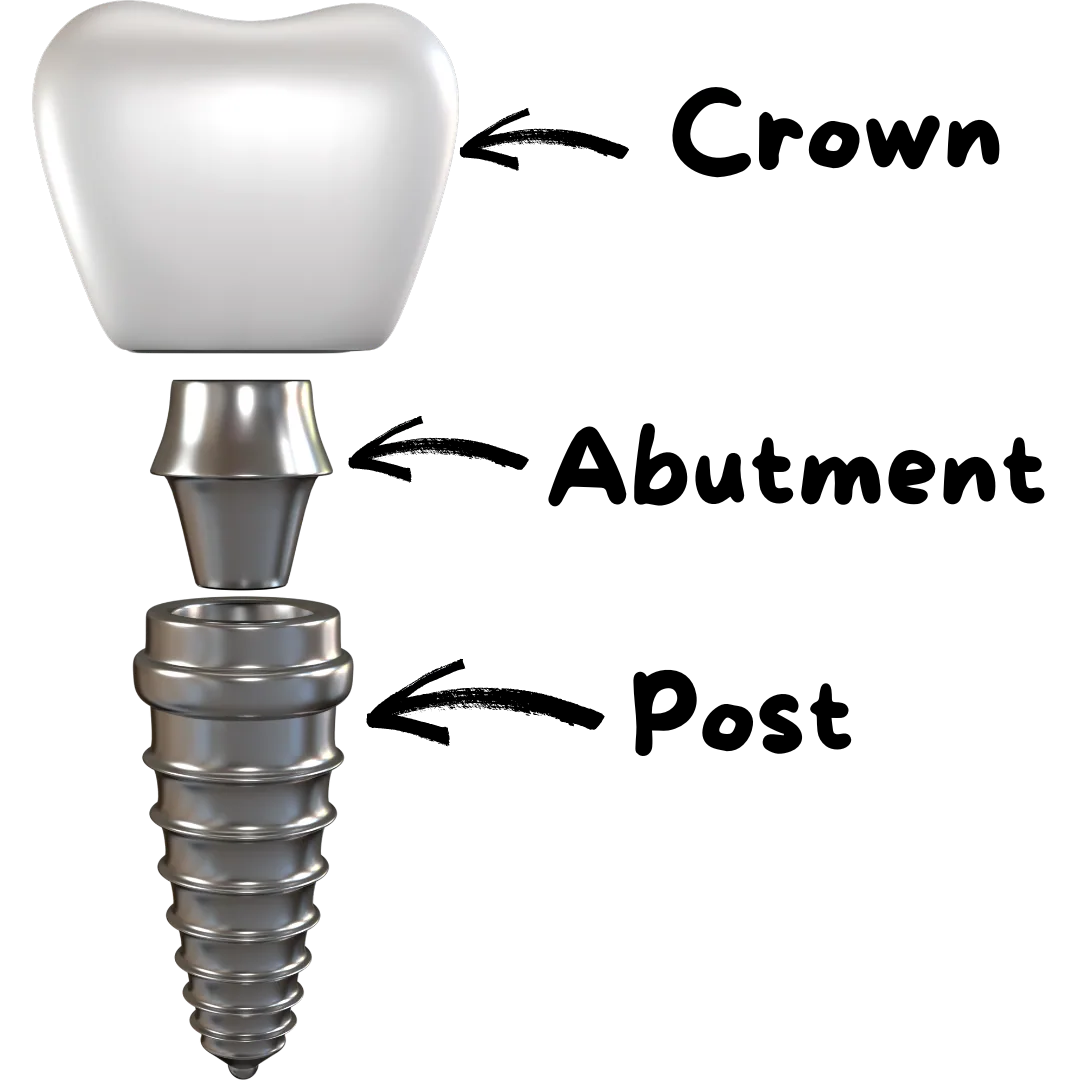
That distinction is the key to the whole question. The number of implants and the number of teeth are two different things. One implant can hold one crown, or it can be one of several anchors under a bridge or a full arch of teeth.
One Missing Tooth: One Implant
When a single tooth is missing, the usual answer is one implant topped with a crown. It fills the gap, you brush and floss it like a natural tooth, and it leaves the neighboring teeth alone. A traditional bridge, by contrast, needs the healthy teeth on each side of the gap shaped down to hold it in place.
Several Missing Teeth in a Row: An Implant-Supported Bridge
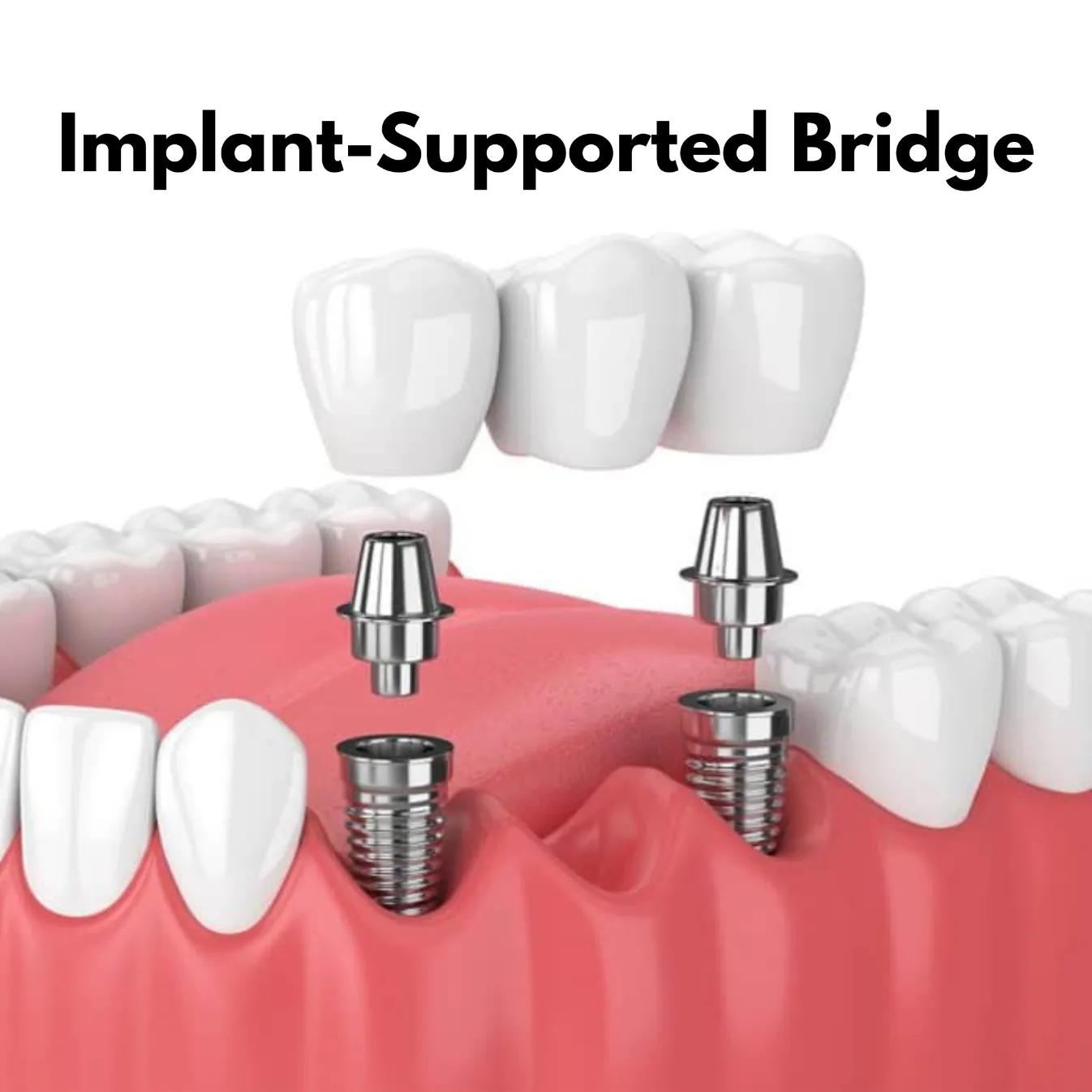
If you're missing three or four teeth side by side, you usually don't need an implant under each one. Two implants can often anchor a bridge that spans the whole gap, with the teeth in between supported by the implants at each end instead of by your natural teeth. Fewer implants means less surgery and a lower cost, and the bridge is still fixed in place.
A Full Arch of Teeth: Four to Six Implants
The numbers change the most when every tooth in an arch is missing or failing. Instead of an implant for each of the 14 or so teeth in an arch, a full arch of fixed teeth is supported by four to six implants. That's the approach behind All-on-4 dental implants and our Ultimate Smile. Your 3D CBCT scan decides whether your arch needs four, five, or six.
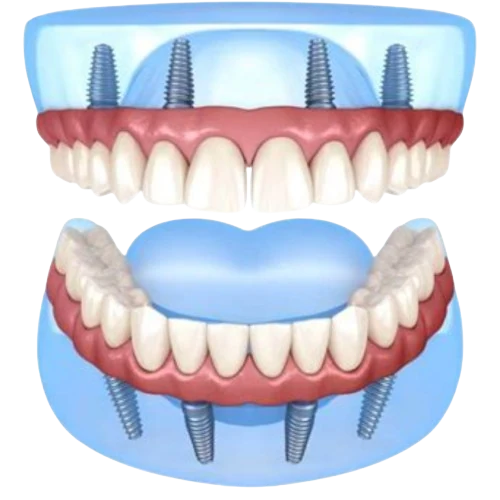
There's also a removable option for the lower jaw. A lower snap-on denture is held by two to four implants, so it stays put while you eat and talk but still comes out for cleaning. Snap-on dentures are for the lower arch only; fixed full-arch teeth are available for either arch.
What Decides How Many Implants You Need
The right number varies from one patient to the next. These are the main factors your doctor weighs:
- Available bone: how much healthy bone you have, and where it is, shapes where implants can go. Our post on what we look for in your 3D X-ray explains how we map it.
- Your dental health: gum health, any infection, and the condition of the teeth you still have.
- Your bite: how hard you bite, and whether you grind or clench, affects how much support your new teeth need.
- Your anatomy: nerves, sinuses, and the shape of your jaw limit where implants can sit and how long they can be.
- Fixed or removable: teeth that stay in all the time generally need more support than a denture that snaps on and off.
That's why we don't give anyone a number over the phone. More implants aren't automatically better, and fewer aren't automatically cheaper in the long run. The goal is the right number in the right positions, planned so your teeth fit evenly and last. Planning ahead also keeps future upgrades possible; our post on moving from dentures to dental implants explains why where your implants go today protects your options tomorrow.
Find Out What Your Smile Needs in Longview, Tyler, or Shreveport
Texas Sedation Dental & Implant Center offers everything from single implants to full-mouth implant restorations. If you're missing several teeth, living with loose dentures, or having trouble chewing, start with a complimentary Ultimate Smile Assessment, a $500 value that includes a 3D CBCT scan. You'll leave knowing how many implants your plan calls for and why. Schedule yours today. Missing just one tooth? Request an appointment for a comprehensive exam with one of our doctors, and we'll walk you through your single-implant options.