Here's something a lot of people don't know about dentures: getting them doesn't mean you'll never have to see a dentist again. In a recent video, Dr. Kendall explained why that common belief isn't true, and what denture wearers should plan for to keep their smile comfortable and secure.
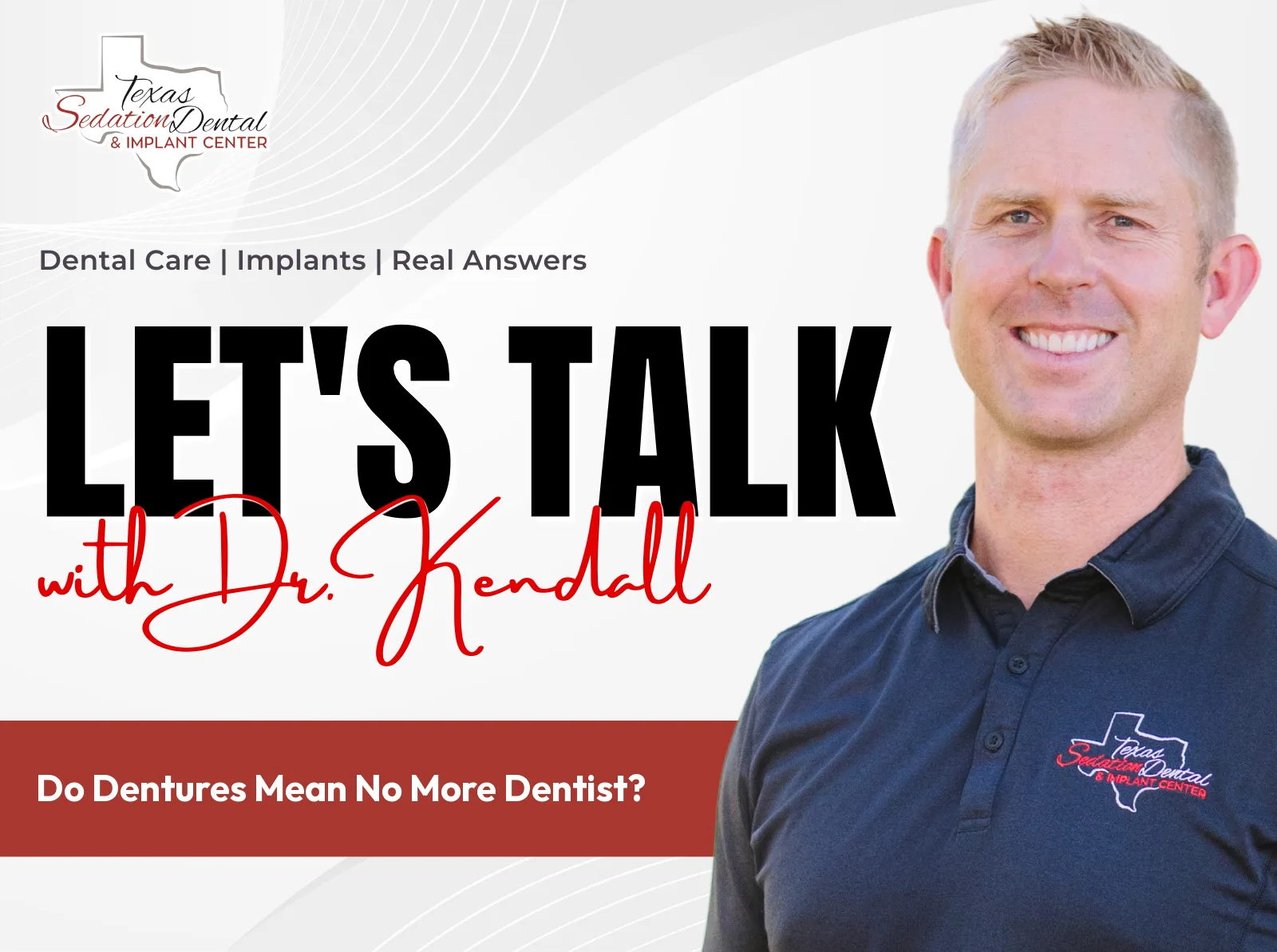
Watch: Getting Dentures Means Never Going Back to the Dentist?!
Your Jaw Keeps Changing Under Your Dentures
Once teeth are gone, the jawbone that used to hold them slowly shrinks. Dentures sit on top of the gums and don't stop that process. As Dr. Kendall describes it, your upper jaw continues to move up and back, and your lower jaw moves down and forward.
For your dentures, that means they gradually feel less and less secure. A denture that fit snugly when it was made can start to rock, slip, or rub sore spots as the bone underneath it changes. Our post on bone health with implants vs. dentures explains why this happens.
Every 2 to 3 Years: A Hard Reline
To keep up with those changes, Dr. Kendall recommends a hard reline every two to three years. We take an impression of how your mouth has changed, send it to the lab, and the lab converts that impression into hard denture material that refits the base of your denture to your gums.
Every 5 to 7 Years: A New Set of Dentures
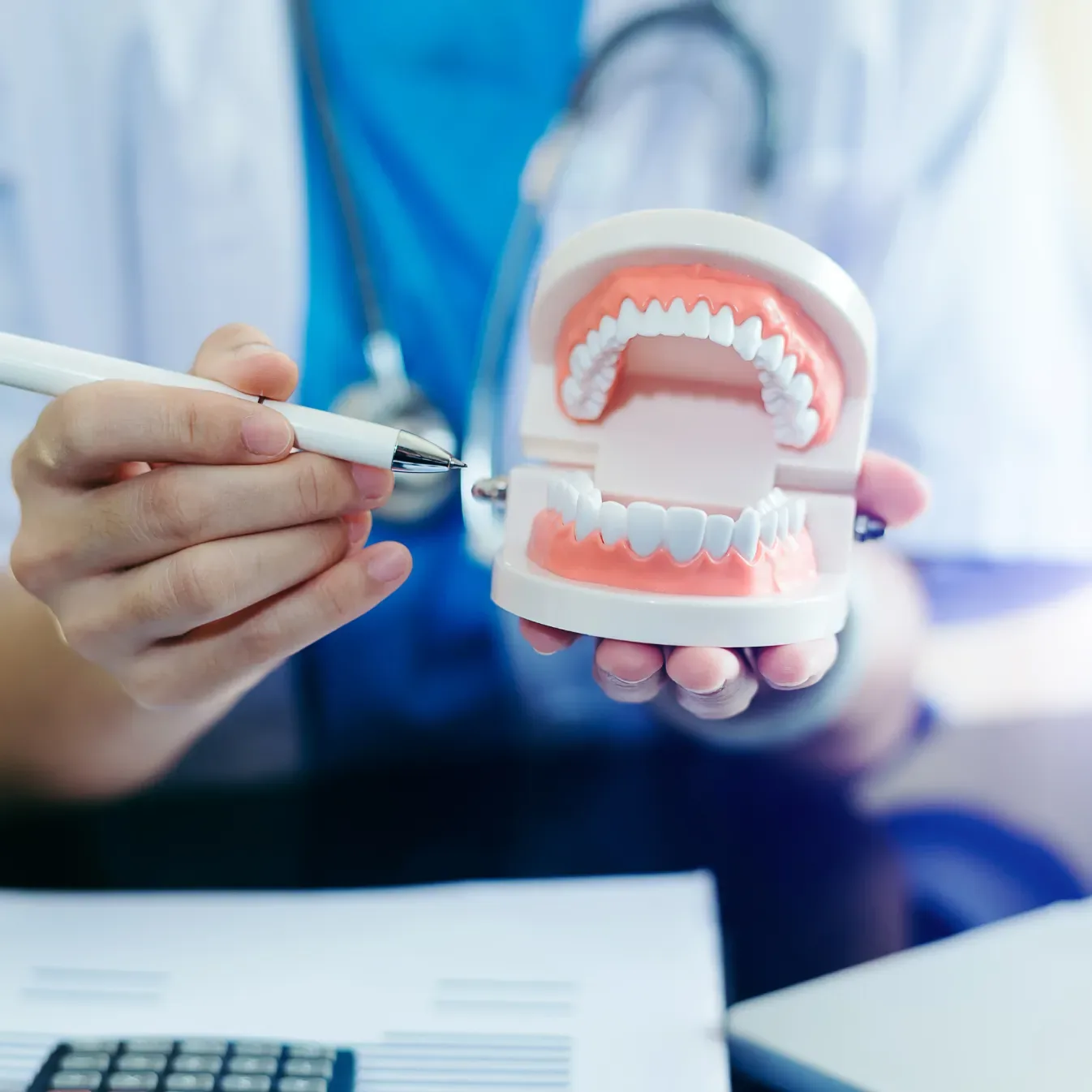
Relines refit the base, but they can't fix where the teeth sit. As your bone moves up and back and down and forward, the denture teeth are no longer in the same position they once were. You start to show less of your upper teeth and less of your lower teeth, and the bite doesn't fit as well. That's why Dr. Kendall recommends a new set of dentures every five to seven years.
Are there people out there that have been in the same dentures for 30 years? Absolutely. Do they fit the same way they did 30 years ago? Absolutely not.
Every Year: An Oral Cancer Screening and Denture Check
Even with no natural teeth, you still need regular dental visits. We recommend an oral cancer screening exam at least once a year, along with a check of how your dentures fit. Well-fitting dentures aren't just more comfortable; keeping them fitting properly helps preserve as much bone as possible.
- Every year: oral cancer screening and a denture fit check
- Every 2 to 3 years: a hard reline
- Every 5 to 7 years: a new set of dentures
What If You Want to Stop the Cycle?
Dentures are a good option for many people, and with regular care they can serve you well. But if you're tired of relines, slipping, and changing fit, implant-supported teeth are worth knowing about. Because implants stimulate the jawbone the way tooth roots do, they help slow the bone loss that makes dentures loosen over time. Our step-by-step guide to moving from dentures to dental implants walks through how that works.
Denture Care in Longview, Tyler, and Shreveport
At Texas Sedation Dental & Implant Center, we make, reline, and replace dentures at all three of our offices, and we can show you every option side by side, from traditional dentures to fixed implant teeth. Your visit is part of our complimentary Ultimate Smile Assessment, a $500 value that includes a 3D CBCT scan. Schedule yours today.