
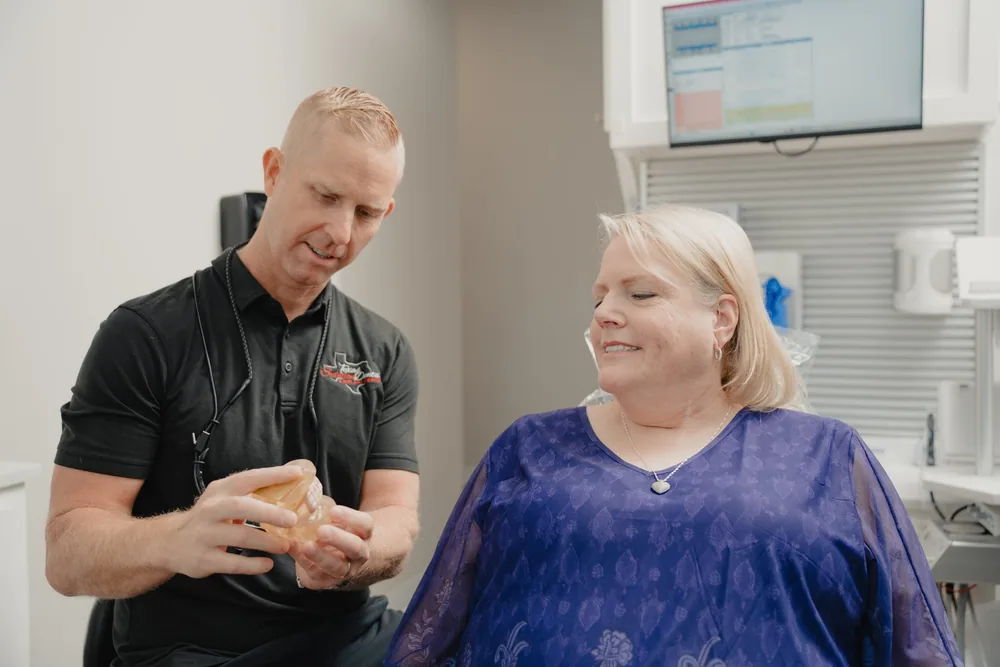
A little pink in the sink after brushing is easy to shrug off. Dr. Kendall says it shouldn't be. When people ask him what the signs are that they need to see a dentist, bleeding gums are one of the first things he mentions, because they're often the earliest warning that you're headed toward gum disease.
Watch: Bleeding Gums Are Not Normal
Gingivitis vs. Periodontitis
Bleeding gums don't automatically mean you have gum disease. You may just have gingivitis. The difference matters:
- Gingivitis is inflammation of the gums. Plaque and bacteria build up around your teeth, the gums become irritated and inflamed, and they bleed easily. At this stage, there is no permanent damage to the bone.
- Periodontitis (gum disease) is the loss of bone and tissue around your teeth. It typically starts as gingivitis that goes untreated, and the bone it destroys doesn't grow back on its own.
That's why bleeding gums are worth taking seriously. They're one of the first signs that you may be on the path toward gum disease, and they show up while the problem is still the easiest to turn around.
Why Gingivitis Is the Stage to Catch
Gingivitis is usually reversible. A thorough professional cleaning removes the plaque and hardened tartar your toothbrush can't, and better daily habits keep it from coming back. Once gum disease has taken bone, treatment shifts from reversing the problem to stopping it, which is why Dr. Kendall's advice is simple: if you have bleeding gums, go see your dentist as soon as possible.
Other Things That Can Make Gums Bleed
Plaque buildup is the most common cause, but it isn't the only one. Brushing too hard or with a stiff brush, starting a new flossing routine, hormonal changes such as pregnancy, and certain medications can also make gums bleed more easily. Your dentist can sort out the cause during an exam, so don't try to diagnose it yourself.
What to Do at Home in the Meantime
- Brush twice a day with a soft-bristled toothbrush, angling gently toward the gumline.
- Clean between your teeth every day with floss or a water flosser.
- Don't stop brushing an area because it bleeds; gentle, consistent cleaning is what helps inflamed gums heal.
- Schedule a visit rather than waiting to see if it goes away.
Implants Can Have Gum Problems Too
Bleeding around a dental implant deserves the same attention. Implants can't get cavities, but the gums and bone around them can become inflamed and diseased, which is one of the potential long-term complications of dental implants Dr. Kendall warns about.
Gum Care in Longview, Tyler, and Shreveport
At Texas Sedation Dental & Implant Center, our team can check your gums, find the cause of the bleeding, and get you on a plan, from a professional cleaning to periodontal care if gum disease has started. If you're a new patient, your first step is a comprehensive exam with one of our doctors. Request an appointment at the office nearest you.